
History
Production of the S-38 began in May 1928 at Sikorsky's factory at College Point, Queens, and the first aircraft was completed that July [3]. Wikipedia dates the first flight to May 25, 1928, while a 2003 AOPA Pilot article gives June 25, so the exact date is unsettled [1][2]. Sikorsky says the first series of ten was sold within eight weeks of the release of its performance data [3]. Wikipedia lists 101 built (11 S-38A, 80 S-38B and 10 S-38C), while AOPA counts 111 [1][2].
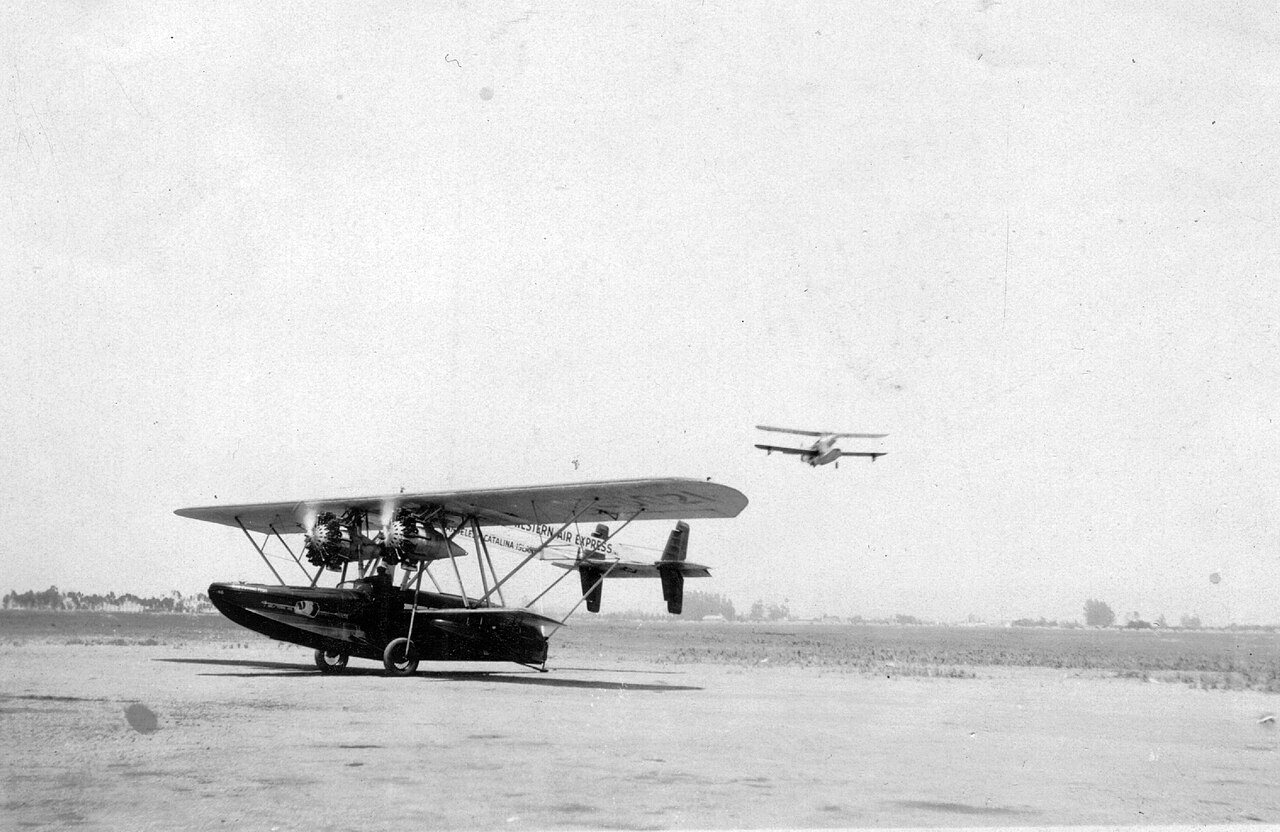
Pan American Airways bought 38 of them. AOPA says they helped the airline grow from a 90-mile (145 km) route between Key West and Havana to a network of about 13,000 miles (21,000 km) around the Caribbean and Latin America [2]. Sikorsky's account says Charles Lindbergh flew an S-38 in 1929 to open air mail service between the United States and the Panama Canal [1]. Other civil users listed on Wikipedia included Hawaiian Airlines, Inter-Island Airways, Western Air Express and KNILM [1].
The US Army Air Corps flew it as the C-6 and C-6A, ten of the latter, and the Navy and Marine Corps used the PS-3 and the RS-3 transport [1]. Explorers Martin and Osa Johnson flew a zebra-striped S-38, Osa's Ark, in Africa to make safari films and books [1]. In 1935 Herbert Fisk Johnson Jr. of the S. C. Johnson company flew one from Racine to Fortaleza, Brazil, to look for carnauba palm, the source of carnauba wax [1].
Design and how it works
The S-38 has a longer upper wing and a much shorter lower one [1]. The S-38B had two 420 hp (310 kW) Pratt & Whitney Wasp engines, a length of 40 ft 5 in (12.32 m), an upper wingspan of 71 ft 8 in (21.84 m) and a gross weight of 10,479 lb (4,753 kg) [1]. Wikipedia lists a top speed of 124 mph (200 km/h) and a range of 600 mi (970 km), while Sikorsky's history gives 130 mph (210 km/h) [1][3]. Sikorsky also says it could fly on one engine and take off from land or water [3].
AOPA's pilot report on a modern reconstruction describes the water handling. Takeoff needs no rotation, spray blocks forward visibility until the aircraft is on the step, and with no water rudder the pilot turns with differential power. On land the original tailskid was replaced with a castering tailwheel, and the pilot steers with differential power and brakes [2].
Survivors and replicas
AOPA reported in 2003 that no original S-38 survived [2]. Two modern aircraft were built in the 1990s by Born Again Restorations of Owatonna, Minnesota [1][2]. One was made for Samuel Curtis Johnson Jr., flew in 1998 and hangs in the S. C. Johnson headquarters in Racine, Wisconsin [1][2]. The other, N28V, was painted as Osa's Ark, appeared in the 2004 film The Aviator and, as of 2017, was at the Fantasy of Flight museum in Florida [1]. Wikipedia calls both replicas, while AOPA says N28V includes original wings and tail booms [1][2].
Related entries
Sources
- Sikorsky S-38, Wikipedia. en.wikipedia.org/wiki/Sikorsky_S-38
- The Flying Boat (AOPA Pilot, September 2003), AOPA (2003-09). www.aopa.org/news-and-media/all-news/2003/september/pilot/the-flying-boat
- Sikorsky S-38, Igor I. Sikorsky Historical Archives. sikorskyarchives.com/home/sikorsky-product-history/american-flying-boats-and-fixed-wing-aircraft/sikorsky-s-38
Last reviewed November 2026. Spotted something to correct or add? Tell us and include a source.
See how to register a low-speed vehicle or boat in your state.
About the Amphibious Encyclopedia
WaterCar has designed and built amphibious vehicles in Southern California for more than 25 years. We keep this encyclopedia so anyone curious about vehicles that cross between land and water has one place to start, with the sources listed for every fact. New to the subject? Start with our guide, What is an amphibious vehicle?
All amphibious vehicles → · The WaterCar machines → · How a WaterCar works →