One obsession.
Build the best amphibious vehicles ever created.
Make them perform. Make them reliable. Make them serviceable.
It started with a 1964 Amphicar and a kid named Chad.
Dave March was raised around machines and never stopped building. If it can drive or float, he has built it, improved it, or found a way to make it better – across the automotive and marine worlds alike.
That instinct found its subject in 1999, when Dave restored a 1964 Amphicar with his young son, Chad. Driving it, he saw the opening no one fluent in both worlds had taken – and set out to build one that was genuinely good at both. That became a life’s work.
An unlikely workshop. A relentless idea.
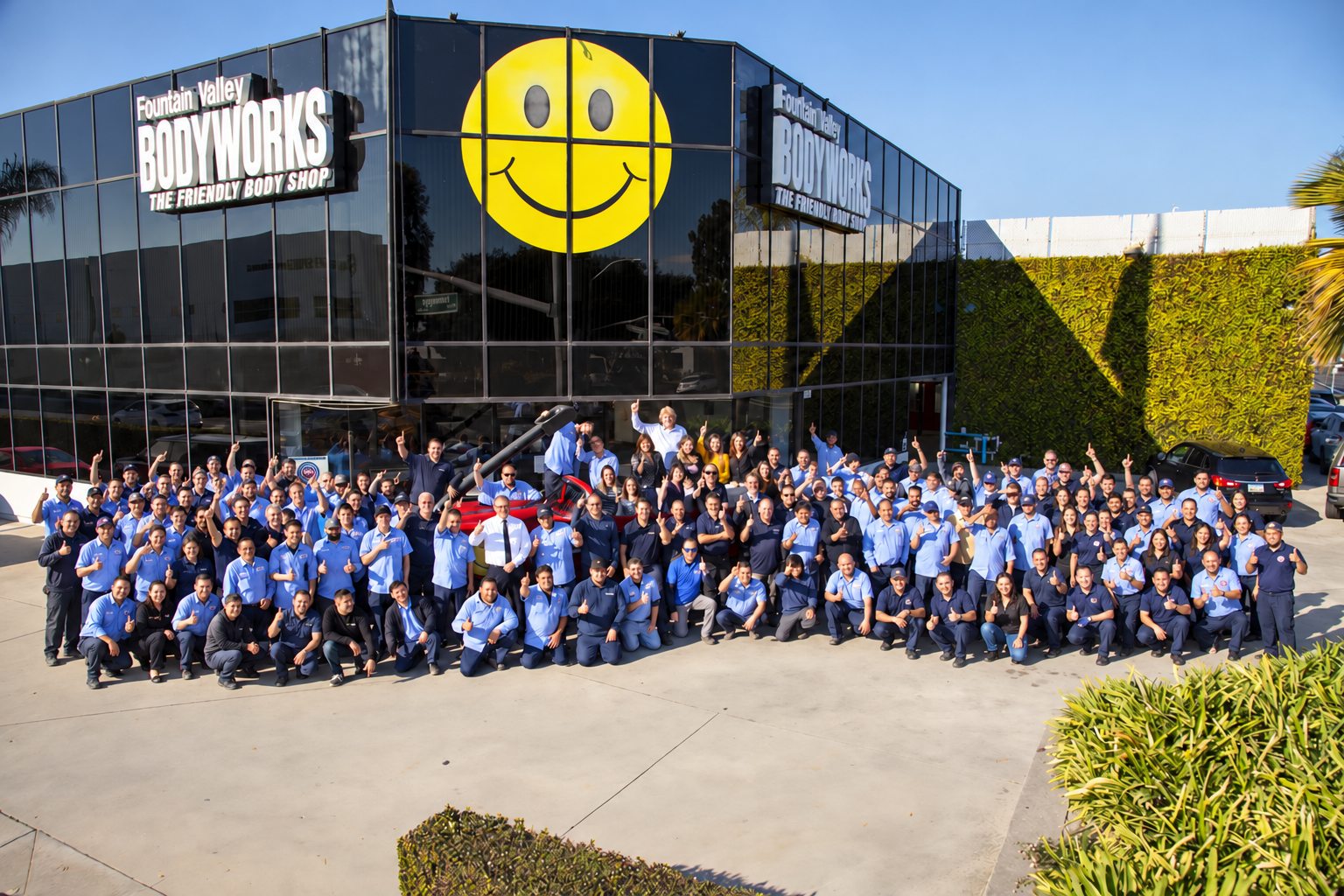
Fountain Valley Bodyworks gave Dave a daily education in how vehicles are built, what fails, and how to put them back together. Over decades, the business handled close to half a million repairs.
That experience mattered when a boat had to carry suspension, steering and a road drivetrain. WaterCar began in the same working shop, with people who understood both how to build a machine and how an owner would need to service it.
Five machines taught us how to build the sixth.
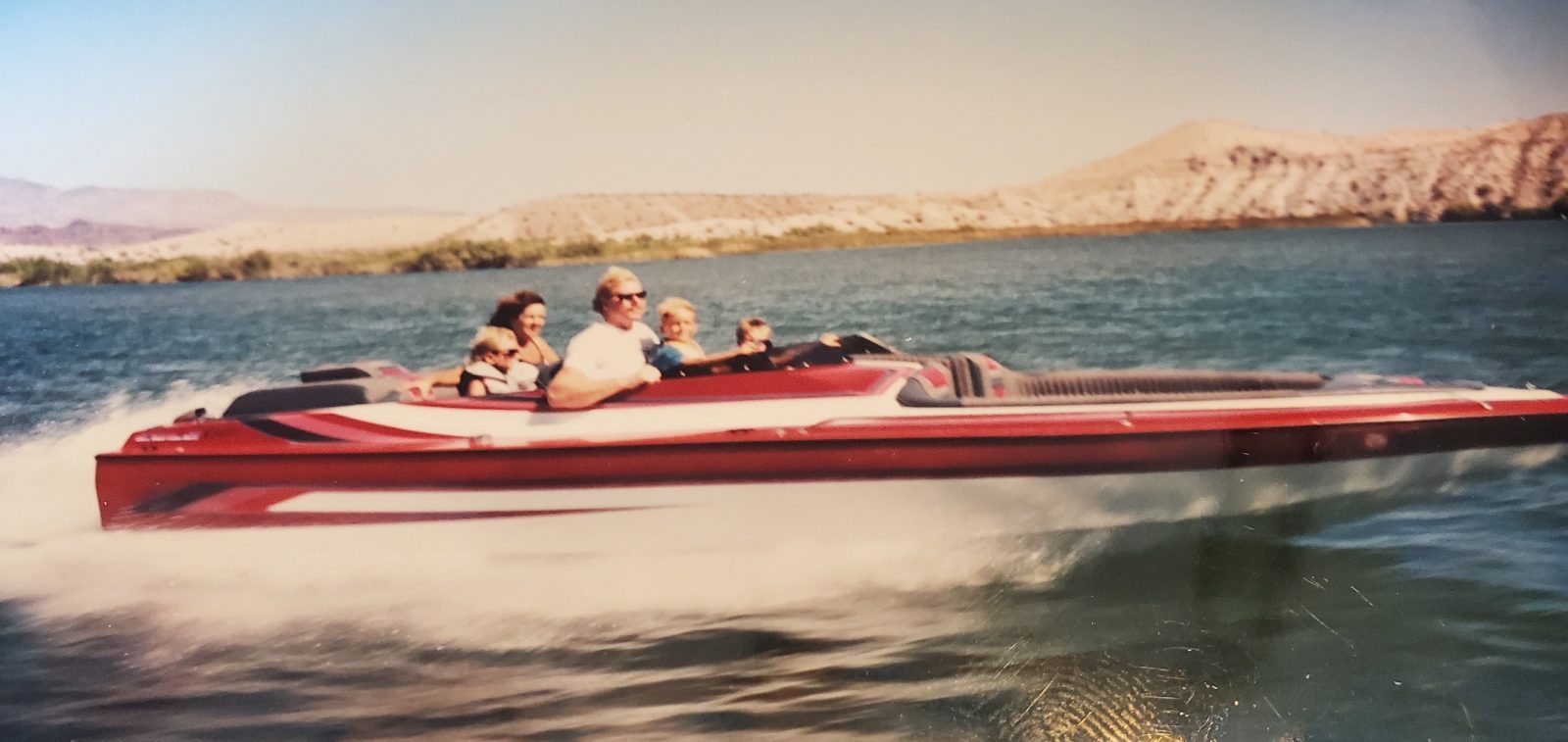
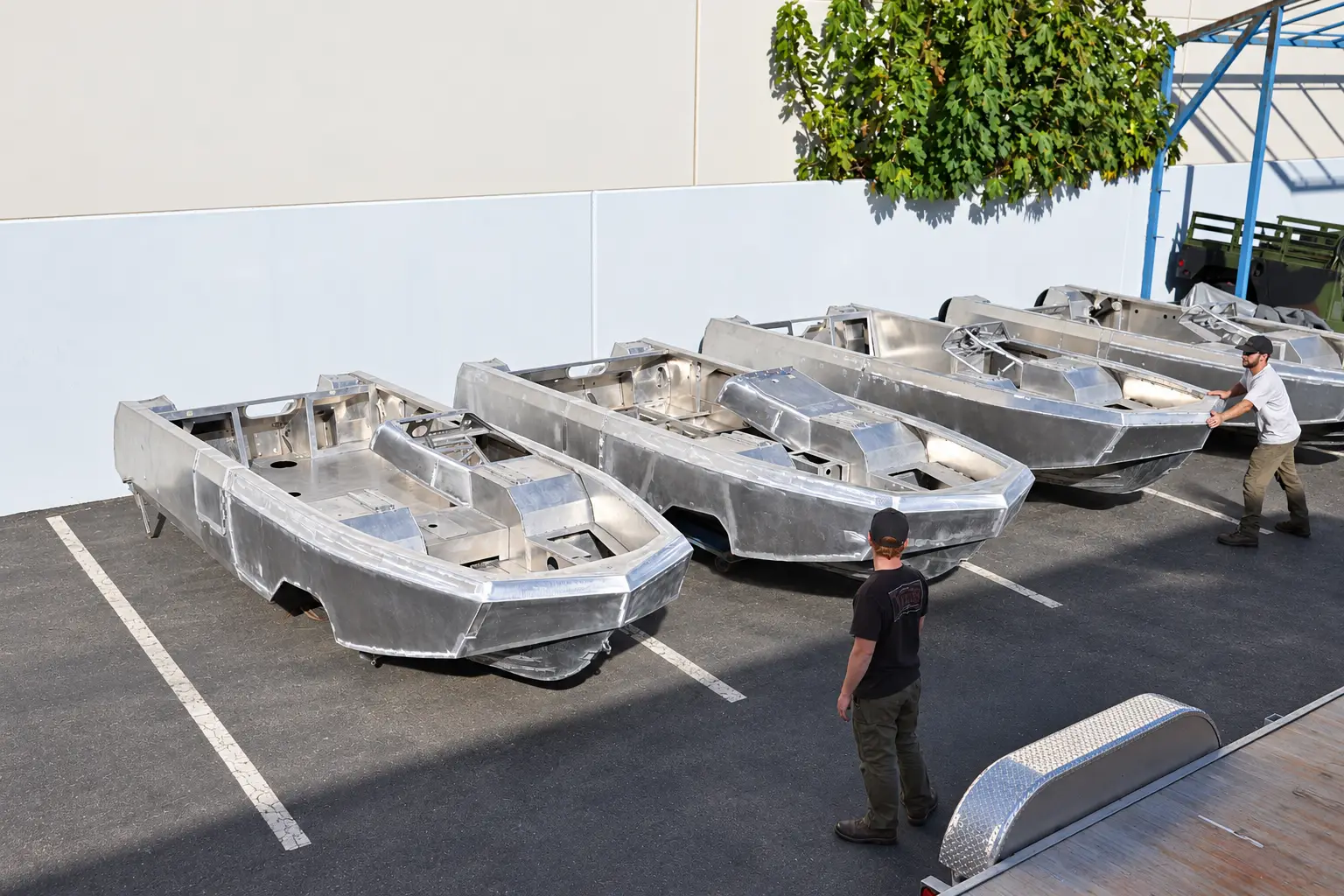
The sports-car prototype led to the Gator, Python, Panther and H1. The Python chased speed and earned a Guinness World Record. The Panther brought the project to customers. The H1 pushed the work into aluminum.
Each added a lesson in hull shape, wheel retraction, propulsion or the change from road to water. Today’s WaterCar is the sixth machine in that line.
The Pacific put it to the test.
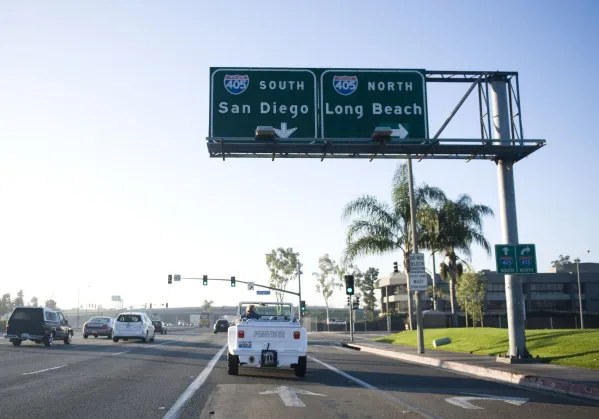
In January 2014, Dave left the Fountain Valley shop in a WaterCar Panther, drove down the 405 and launched into Newport Harbor. Then he pointed the bow toward Catalina, roughly thirty miles across the open Pacific. About seventy minutes later, he reached Avalon. After the crossing, he turned around and drove it home the same way.
WaterCar Panther beneath Interstate 405 direction signs, January 2014, headed for Newport Harbor and Catalina. Photo:
.
The Panther shown here is an earlier WaterCar model. Today’s models use a 25 mph road drive for local trips.
Built for the people who own it.
A WaterCar has to do more than make an extraordinary first impression. It has to work for the person who owns it, uses it and maintains it. Bringing safety, performance, reliability and serviceability together became the brief.
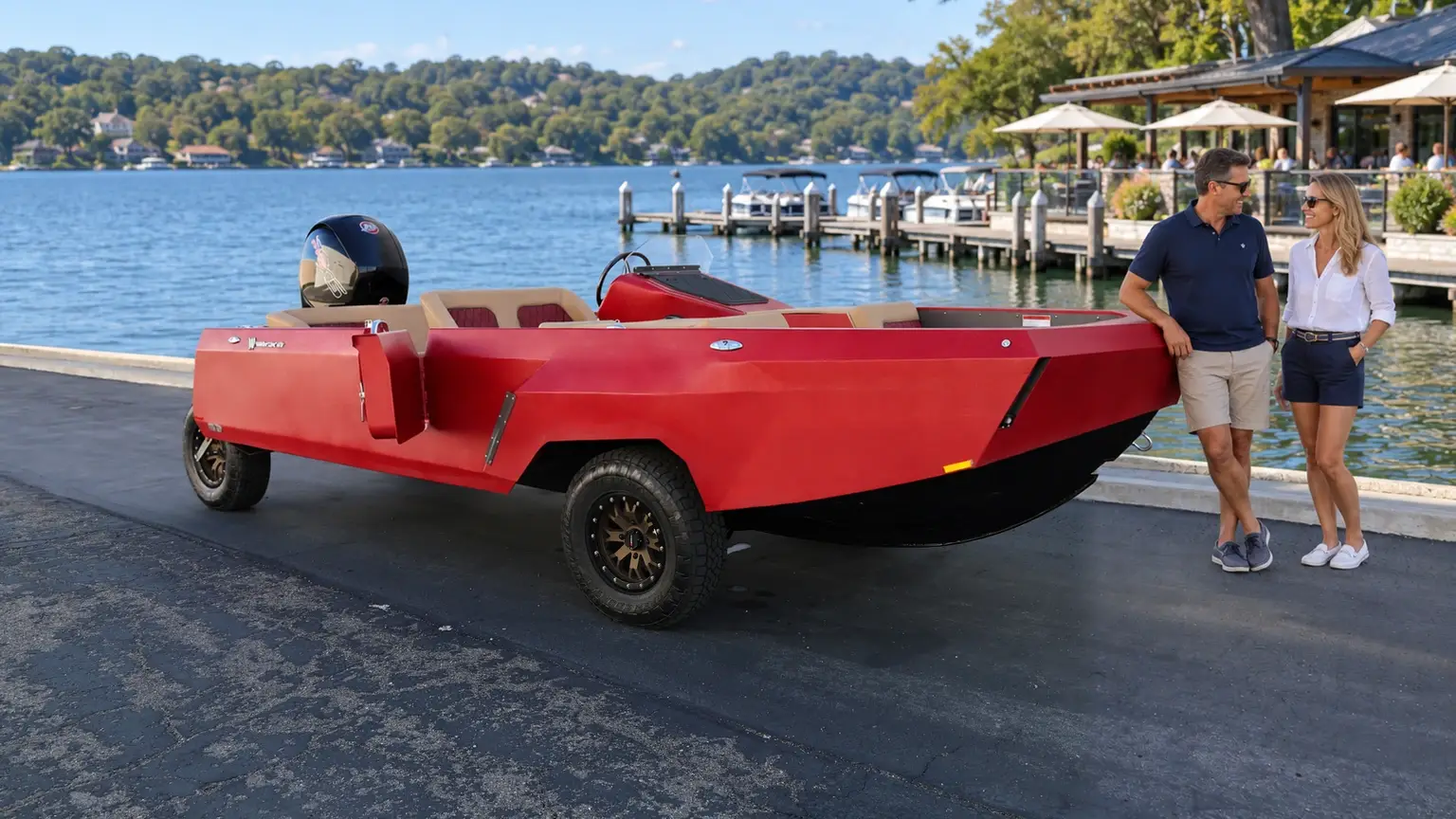
An advanced welded aluminum unibody superstructure. Four-wheel hydraulic disc brakes with separate front and rear circuits for redundancy. A foam-filled hull for added flotation. Model-year 2026 NMMA certification addresses applicable U.S. Coast Guard requirements.
The hull has to get onto plane and run as a boat, with the wheels retracted clear of the water. The prototypes proved the idea. Each generation refined it.
Keep the systems straightforward. Choose proven components for the job. Make inspection and routine maintenance accessible, so the boat can keep doing what it was built to do.
Design the marine components for a marine mechanic and the road components for an auto mechanic. Keep those jobs familiar, with WaterCar support for the amphibious systems that connect the two.
Six machines later, the goal is more time on the water.
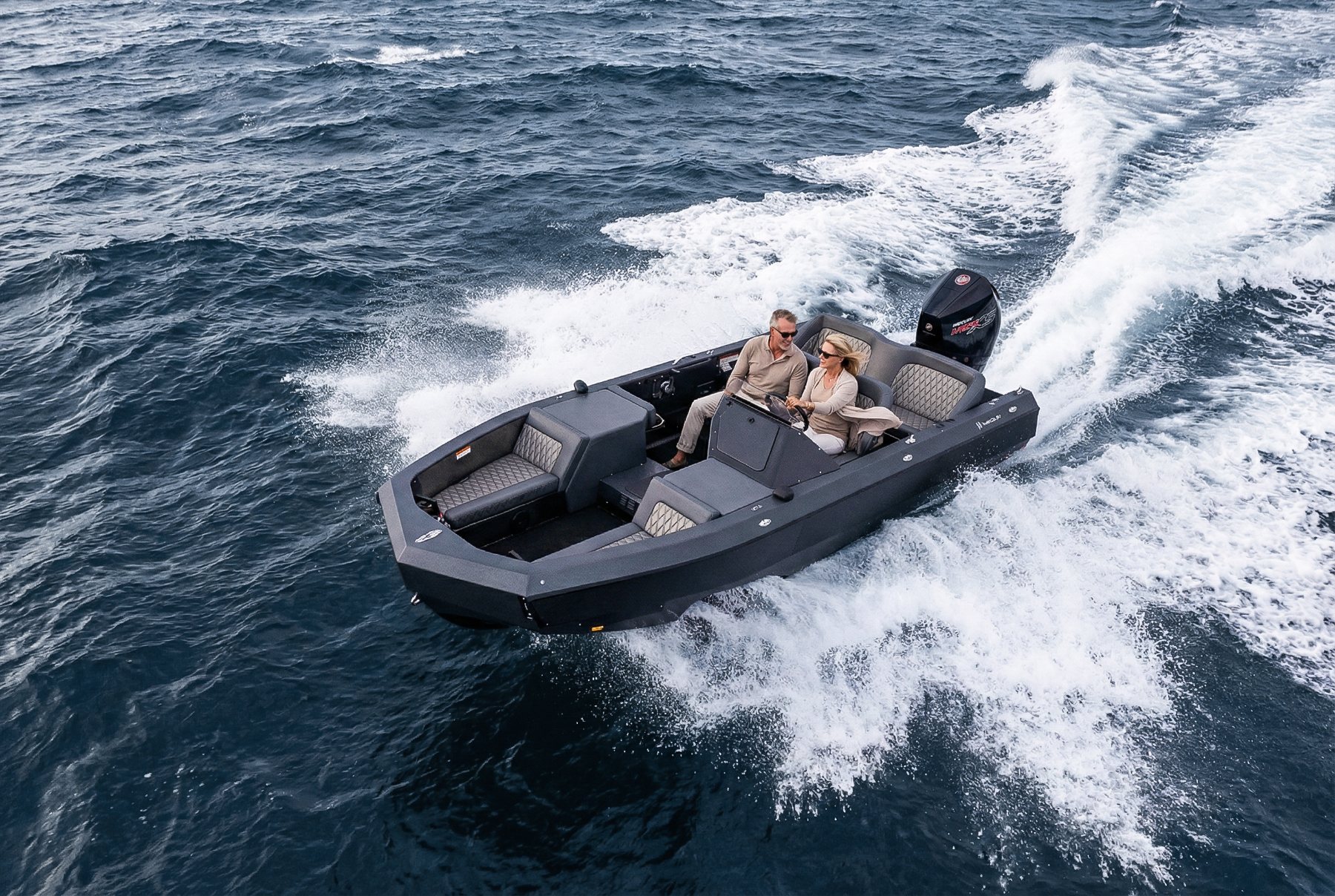
Today’s WaterCar brings those lessons into a welded aluminum boat with Mercury outboard power and electric drive for local roads. The purpose is the same one that started the work: a capable boat, and a simpler way to get out and use it.
Decades of experience led here.
A $5,000 deposit holds your place. Fully refundable until you sign a purchase agreement. WaterCar charges no cancellation fee. Bank or card-processing fees may not be refundable. Built to order and delivered worldwide. Choose your model later.