
History
Sikorsky designed the S-39 as a smaller aircraft for individual pilot-owners, sportsmen and executives, following the success of the S-38 [2]. Design began in mid-1929 as a twin-engine aircraft with two 100 hp British Cirrus Hermes engines [2]. That version first flew on December 24, 1929, and crashed on December 30 after one engine lost power [2]. Sikorsky dropped the twin-engine idea and fitted a single 300 hp Pratt & Whitney Wasp Junior, and the new version first flew in early February 1930 [2].
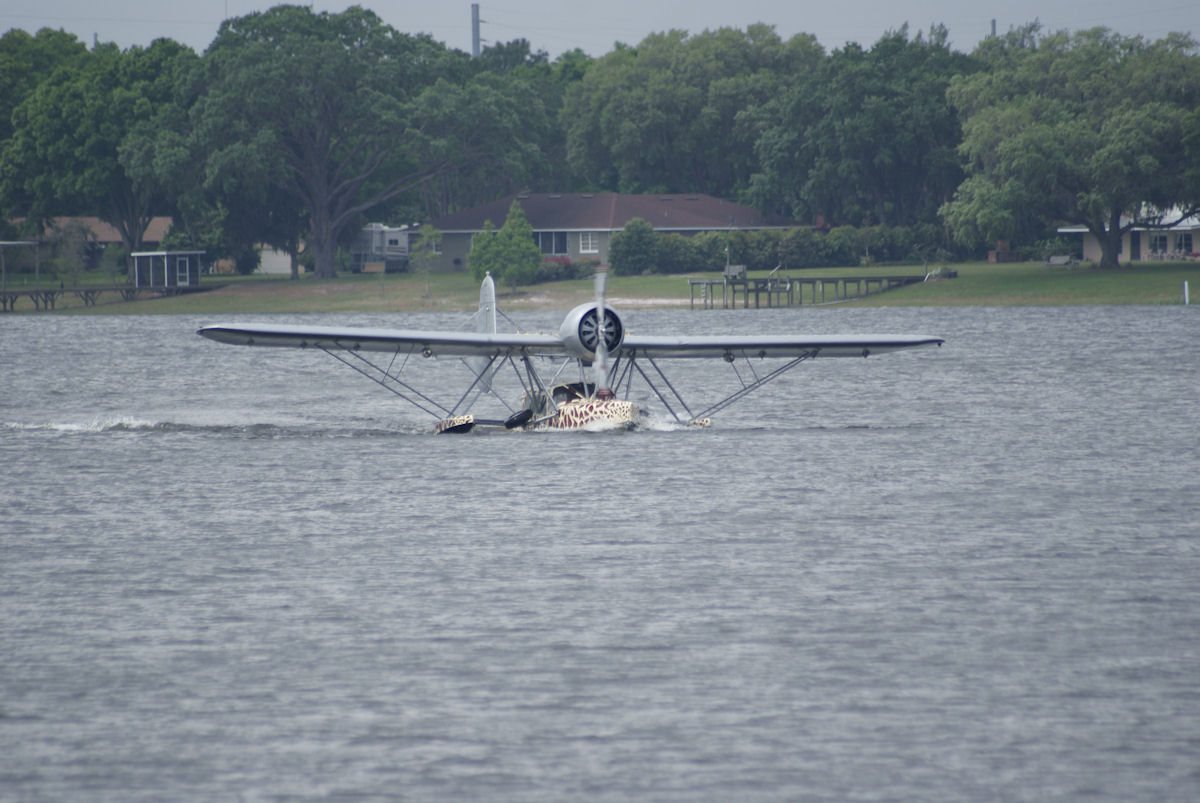
Production totals vary. Wikipedia and Fantasy of Flight give 21 aircraft built in 1930 and 1931, while the Sikorsky archive says more than 23 [1][2][3]. Martin and Osa Johnson flew a giraffe-patterned S-39, Spirit of Africa, on safari expeditions in Africa and Borneo, and Sikorsky's archive says it logged more than 60,000 miles (97,000 km) in Africa [1][2]. The US Army Air Corps acquired one in 1932 as the Y1C-28, redesignated C-28 in 1934, and assigned it as a liaison aircraft to the US Military Academy at West Point [1]. At least one S-39 served with the Civil Air Patrol's Coastal Patrol in 1942 and 1943, searching for submarines and ships in distress [1].
Edward A. Deeds had his yacht Lotosland designed to carry an aircraft. According to Wikipedia, the planned aircraft was lost when it was first loaded, and Deeds ordered an S-39-A as a replacement the next day [1]. Sikorsky's archive calls the S-39 the first aircraft mounted on a private yacht and says it set two world records, which are the archive's own claims [2].
Design and how it works
The S-39 has a 52 ft (15.85 m) wingspan and a gross weight of 4,000 lb (1,814 kg) [1][2]. The S-39A listed a top speed of 115 mph (185 km/h), a cruise speed of 97 mph (156 km/h) and a range of 375 mi (604 km) [1]. It was the first aircraft to use the Wasp Junior engine, and the first aircraft Sikorsky designed and built after moving from Long Island to Connecticut, according to the company's archive [2].
Survivors
Fantasy of Flight in Polk City, Florida, says its S-39, named Spirit of Igor, is the only airworthy example, and that Dick Jackson of New Hampshire restored it over about 40,000 hours, starting from the hull of NC50V found in the Alaskan bush [3]. Wikipedia describes the aircraft as a composite of parts from five S-39s that first flew again in 2003 [1]. The museum lists a top speed of 119 mph (190 km/h) for it with its current 400 hp engine, above the 300 hp original [3]. An S-39B, serial number 904, is on static display at the New England Air Museum in Windsor Locks, Connecticut [1].
Related entries
Sources
- Sikorsky S-39, Wikipedia. en.wikipedia.org/wiki/Sikorsky_S-39
- Sikorsky S-39, Igor I. Sikorsky Historical Archives. sikorskyarchives.com/home/sikorsky-product-history/american-flying-boats-and-fixed-wing-aircraft/sikorsky-s-39
- 1930 Sikorsky S-39, Fantasy of Flight. www.fantasyofflight.com/collection/aircraft/currently-not-showing-in-museum/golden-age/1930-sikorsky-s-39
Last reviewed November 2026. Spotted something to correct or add? Tell us and include a source.
See how to register a low-speed vehicle or boat in your state.
About the Amphibious Encyclopedia
WaterCar has designed and built amphibious vehicles in Southern California for more than 25 years. We keep this encyclopedia so anyone curious about vehicles that cross between land and water has one place to start, with the sources listed for every fact. New to the subject? Start with our guide, What is an amphibious vehicle?
All amphibious vehicles → · The WaterCar machines → · How a WaterCar works →