
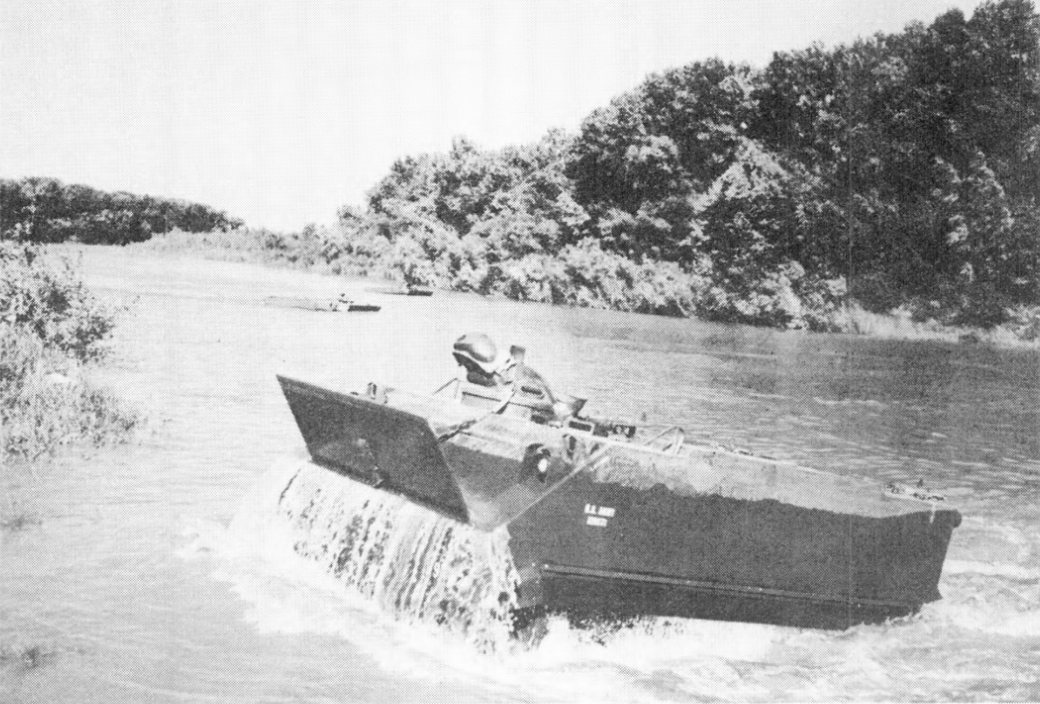
History
Work on a replacement for the M75 armored personnel carrier began in late 1951 [1][3]. FMC built prototypes, and its T59 was classified as the M59 in May 1953 [1]. The AFV Database records the first vehicle accepted in August 1953 [2]. The M59 entered US Army service in the spring of 1954, replacing the M75 [1][3].
Sources agree that it was cheaper than the M75, lower in profile and amphibious [1][3]. To save cost, FMC used two civilian-type truck engines in place of one large engine [1][3]. Wikipedia says this layout hurt reliability and that protection was lower than the M75 [1].
Production ran to 1960, with about 6,300 built [1][2][3]. The M59 was used in the Vietnam War and the Lebanese Civil War [1][3]. Wikipedia lists foreign users that include Turkey (1,550), South Vietnam (866), Brazil (500), Greece (200) and Ethiopia (120) [1]. The Tucson Military Vehicle Museum says the US retired it in the late 1980s [3]. The M113 family replaced it [1].
Design and how it swims
The M59 is 5.61 m (221 in) long and weighs 19,300 kg (42,600 lb) in combat order, with a crew of two and ten passengers [1][2]. Two GMC 302 six-cylinder gasoline engines of 146 hp each sit in sponsons on either side, which leaves the center of the hull clear for troops [1][2]. Its welded steel armor ranges from about 9.5 mm (0.375 in) on top to 25 mm (1 in) on the belly [1][2].
The hull has rubber seals on its hatches and doors and a trim vane on the front slope [1][2]. Top road speed is about 32 mph (51 km/h) and top water speed about 4.3 mph (6.9 km/h) [1][2]. The sources opened here do not say how the M59 was propelled afloat.
Two variants are documented. The M84 mortar carrier, with a 4.2-inch mortar and production from January 1957, was later replaced by the M106 [1]. The LVT-6 designation covered a small number of M59s with improved hull lines, built for a US Marine Corps requirement ultimately filled by the LVTP-5 [1]. A 1959 Army training film, held by Periscope Film, includes M-59 carriers crossing a river [4].
Related entries
Sources
- M59 armored personnel carrier, Wikipedia. en.wikipedia.org/wiki/M59_armored_personnel_carrier
- Armored Personnel Carrier M59, late production, AFV Database. afvdatabase.com/usa/apcm59.html
- M59 armored personnel carrier, Tucson Military Vehicle Museum. www.tucsonmilitaryvehicle.org/exhibit/m59-armored-personnel-carrier
- 59684 U.S. Army road test procedures for tactical tracked vehicles, tanks and personnel carriers, Periscope Film (1959). stock.periscopefilm.com/59684-u-s-army-road-test-procedures-for-tactical-tracked-vehicles-tanks-personnel-carriers
Last reviewed November 2026. Spotted something to correct or add? Tell us and include a source.
See how to register a low-speed vehicle or boat in your state.
About the Amphibious Encyclopedia
WaterCar has designed and built amphibious vehicles in Southern California for more than 25 years. We keep this encyclopedia so anyone curious about vehicles that cross between land and water has one place to start, with the sources listed for every fact. New to the subject? Start with our guide, What is an amphibious vehicle?
All amphibious vehicles → · The WaterCar machines → · How a WaterCar works →